
Voltage tester non contact tools are one of the quickest ways to check for live voltage without touching bare metal, which is exactly why they show up in so many “quick safety check” toolkits.
If you’ve ever wondered whether a wire is still energized, or whether a switch actually killed power to a box, a non-contact tester can save time and help you avoid the kind of mistake that turns into a scary moment. It’s not a magic wand, but it’s a very practical first check.
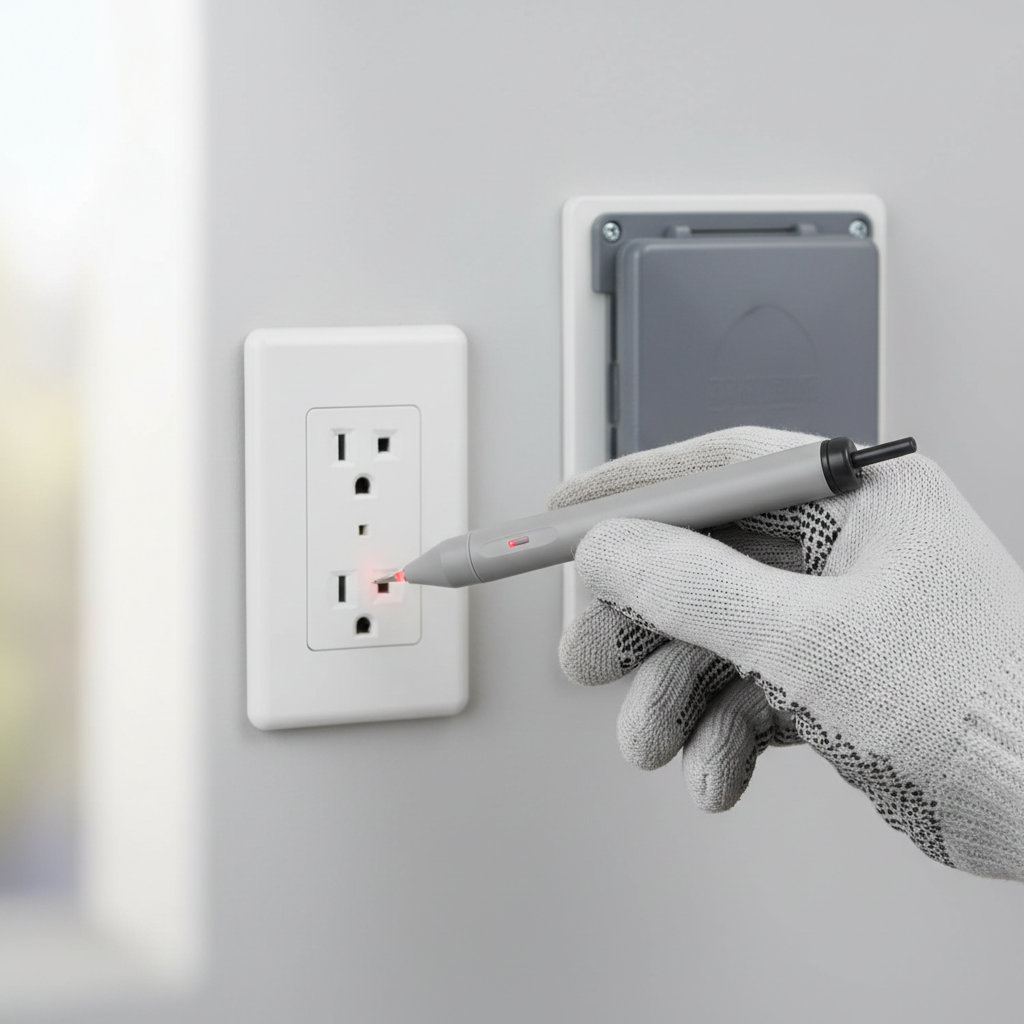
That said, a lot of people use these testers in the one situation where they’re easiest to misread: old wiring, crowded boxes, or when you’re relying on one quick beep as “proof” the circuit is dead. This guide keeps it real—what they do well, where they can fool you, and how to use them the way electricians typically do.
What a Non-Contact Voltage Tester Does (and What It Doesn’t)
A non-contact voltage tester senses an electric field around an energized conductor. You don’t clamp anything onto the wire and you don’t need to touch exposed copper, you’re basically checking for “there’s live voltage nearby.”
Where it shines: fast screening. Where it struggles: telling you how much voltage, whether a neutral is floating, or whether you have a weird backfeed. In other words, it’s a great “is this probably live?” tool, not a full diagnostic instrument.
- Good for: confirming a breaker likely killed power, finding a hot conductor in a bundle, checking outlets/switches quickly.
- Not ideal for: measuring exact voltage, troubleshooting multi-wire branch circuits, proving a circuit is truly de-energized on its own.
According to OSHA, verifying circuits are de-energized is part of safe electrical work practice, and many situations call for proper testing procedures rather than a single quick check. If you’re unsure what “proper” looks like in your job or setting, ask a qualified electrician or your safety lead.
Why Non-Contact Testers Give False Positives or False Negatives
This is the part most product listings skip. A voltage tester non contact can mislead you for reasons that have nothing to do with “cheap tool” versus “premium tool.” A lot comes down to wiring conditions and how you’re using it.
Common reasons for false positives
- Induced/ghost voltage: nearby energized wires can induce a small field on an “off” conductor, especially in bundled runs.
- Capacitive coupling: long parallel wire runs can make a dead wire look alive to a sensitive tester.
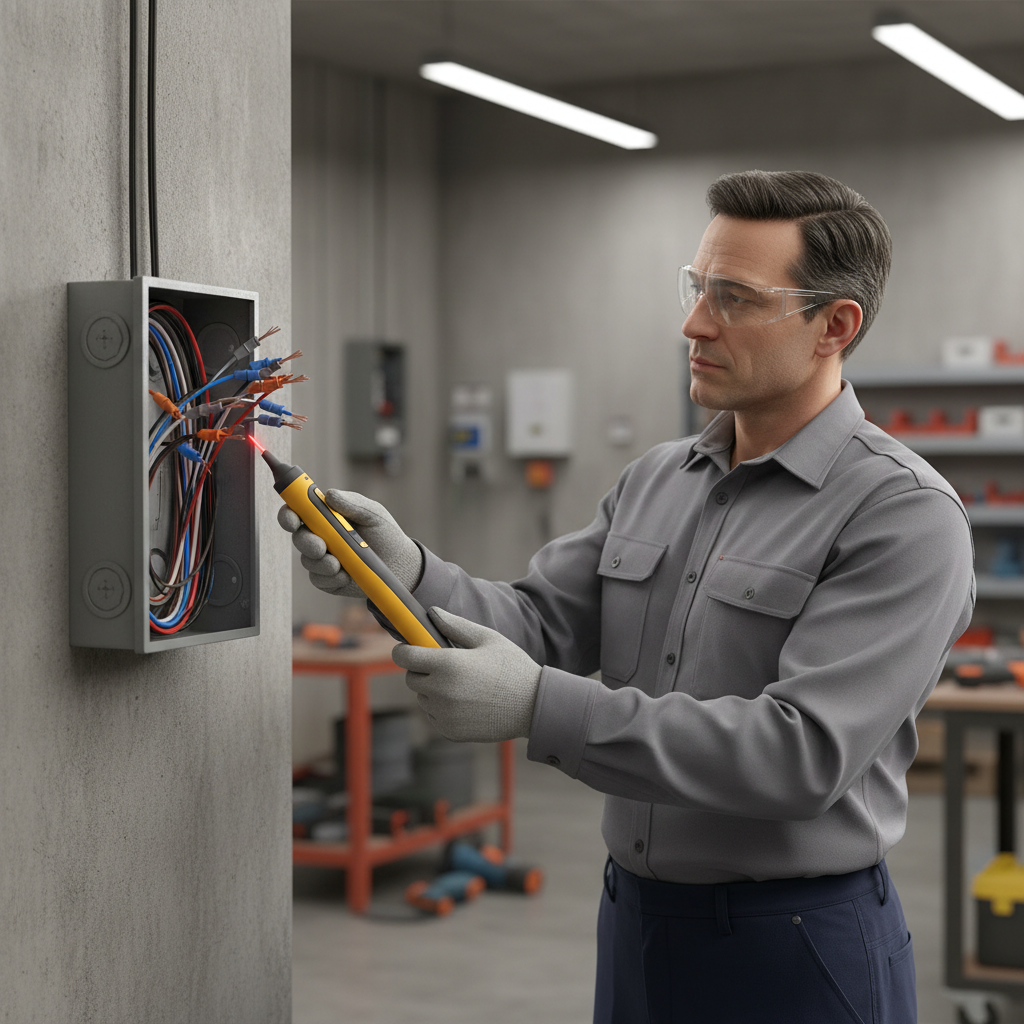
- Metal boxes and tight spaces: the tester may pick up adjacent conductors through the box opening.
Common reasons for false negatives
- Low battery or failed self-test: many pens will still light weakly, which people interpret as “fine.”
- Shielding and insulation thickness: some cable types and deep-set conductors reduce what the sensor can detect.
- Technique issues: moving too fast, testing from the wrong angle, or not getting close enough.
Quick Self-Check: Are You Using the Right Tool for This Job?
Before you trust the reading, run through this short checklist. It’s the difference between “helpful screening” and “false confidence.”
- Do you only need to know live vs. not-live? If yes, a non-contact tester is often fine as a first pass.
- Do you need proof the circuit is de-energized? Consider confirming with a contact-style meter or two-pole tester, especially on critical work.
- Are you in a crowded box, old home, or mixed circuits? Expect more confusing readings.
- Can you test on a known live source first? If you can’t, you’re missing the most important sanity check.
- Are you working on a panel or service equipment? Many homeowners should stop here and call a pro—risk and consequences jump fast.
According to NFPA guidance around electrical safety, verifying absence of voltage using appropriate test instruments and methods is central to reducing shock risk. The exact method depends on the environment and task, so if this is more than a basic home check, get qualified advice.
How to Use a Non-Contact Voltage Tester Safely (Step-by-Step)
Here’s a practical routine that reduces bad readings without turning your “quick check” into a 20-minute ritual.
1) Prove the tester works before you rely on it
- Test it on a known live outlet or cord.
- Confirm you get the expected light/beep pattern.
- If the tool has a self-test button, use it, but still verify on a live source.
2) Scan, then pinpoint
- Start a little farther away, then move closer slowly.
- Approach the wire or device from a couple angles, especially in a packed box.
- When possible, separate conductors slightly to reduce “neighbor influence.”
3) After switching off, test again (and test the tester again)
- Turn off the breaker or switch.
- Check the target area.
- Re-check on a known live source to confirm the tool didn’t die mid-task.
This “live-dead-live” habit is common in the trade because it catches dead batteries and broken testers at the worst possible time.
Choosing the Right Non-Contact Voltage Tester: What Actually Matters
Features can be useful, but only if they match how you’ll use the tool. A voltage tester non contact for occasional home checks can be simpler, while frequent troubleshooting tends to benefit from clearer indicators and better build quality.
| Feature | Why it matters in real use | Who benefits most |
|---|---|---|
| Adjustable sensitivity | Helps reduce false positives in crowded wiring, or boost detection through insulation | DIYers in older homes, maintenance techs |
| Clear tip light + audible alarm | Better feedback in bright rooms or noisy spaces | Most users |
| CAT rating (for meters/testers) | Indicates suitability for certain environments; don’t treat it as marketing fluff | Anyone near panels or building wiring |
| Auto power-off / low-battery warning | Reduces the “it worked last month” surprise | Occasional users |
| Build and clip quality | Real-world durability, less likely to crack or get inconsistent | Pros, tool-bag carry |
One note: if you’re comparing models, look for a manual that explains detection range and limitations clearly. Vague claims like “detects everything” are usually a red flag.
Practical Scenarios: What to Do (and What Not to Assume)
People rarely ask about testers in a vacuum, they ask because something feels uncertain in the moment. Here are a few common scenarios and the safer way to interpret results.
Swapping a light switch or receptacle
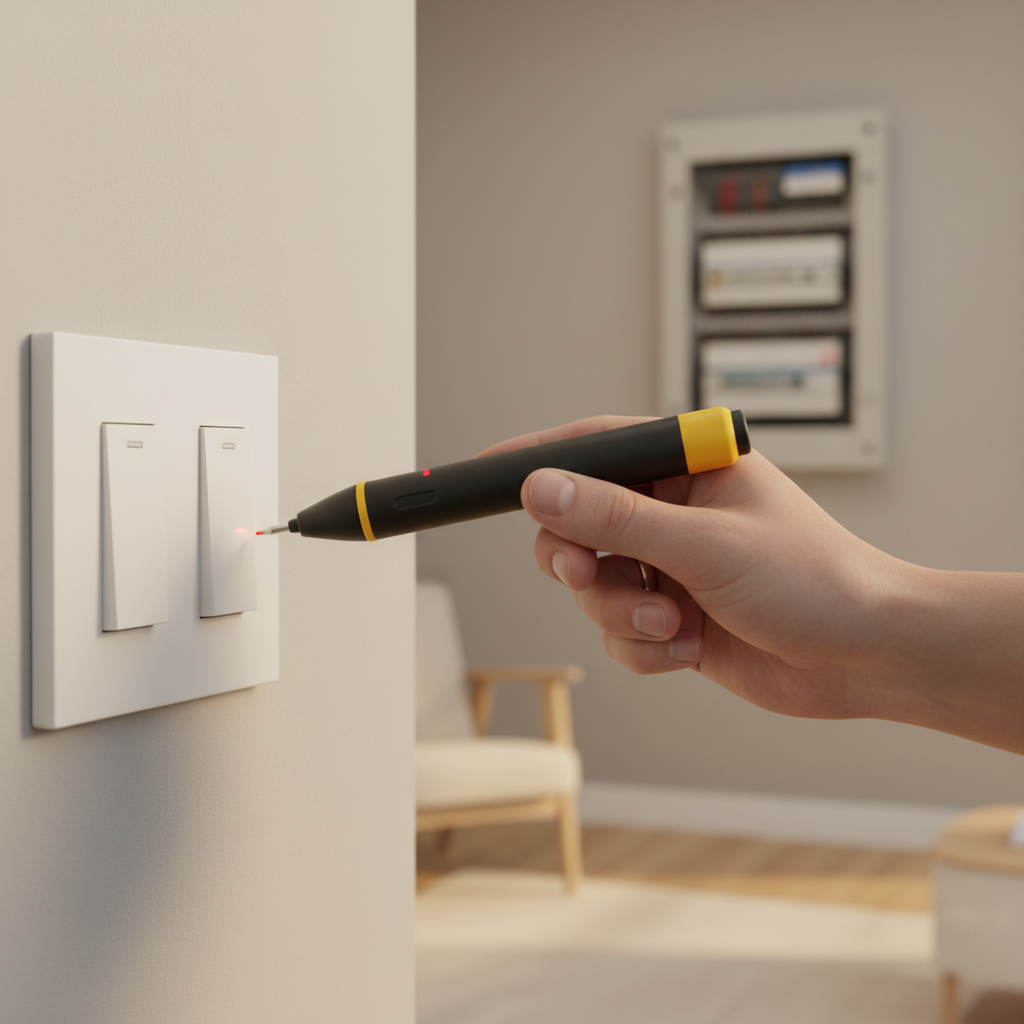
- Do: shut off the breaker, verify at the device, then confirm using a second method if anything looks odd.
- Don’t assume: “no beep” means you can grab every conductor without risk, especially with shared neutrals.
Finding which breaker controls an outlet
- Do: use the tester as a quick indicator, then confirm by plugging in a lamp or outlet tester.
- Don’t assume: the first breaker that stops the beep is always the correct circuit in older panels.
Checking a cord, power strip, or appliance lead
- Do: test near the plug and along the cord, then unplug and re-test to learn what “dead” looks like.
- Don’t assume: detection along a cord proves the internal conductors are healthy, it only indicates an energized field.
Common Mistakes That Create “Fake Safety”
Non-contact testers are simple, which makes it easy to skip the boring steps. Unfortunately, those boring steps are what keep the tool honest.
- Not testing on a known live source first: the tool might be dead and you’ll never know.
- Relying on one tool only: for higher-risk work, confirm with a contact meter or two-pole tester.
- Ignoring weird behavior: intermittent beeps, faint lights, or inconsistent results usually mean “slow down.”
- Testing through thick materials: some covers, deep boxes, and cable types can block detection.
- Working beyond your comfort zone: panels and service equipment carry higher hazard, even if the tester is quiet.
Key takeaway: treat a non-contact reading as a strong hint, then verify when the consequence of being wrong is high.
When to Get a Licensed Electrician (and Why It’s Not Overkill)
If you’re troubleshooting repeated breaker trips, warm outlets, buzzing panels, aluminum wiring concerns, or anything involving the main service, it’s usually smart to stop and get professional help. The risk is not only shock, but also arc faults and heat damage that’s hard to see.
According to the U.S. Consumer Product Safety Commission (CPSC), electrical hazards can contribute to fires and injuries, and addressing warning signs early matters. If you notice burning smells, discoloration, or sparking, consider it urgent and consult a licensed electrician.
Conclusion: A Smart Way to Make Non-Contact Testing Actually Safer
A voltage tester non contact is worth owning because it makes the “is this live?” question fast, but it works best when you treat it as one layer of safety, not the whole plan. Build the live-dead-live habit, expect weird readings in crowded wiring, and verify with a contact method when the stakes rise.
If you want one simple action today, replace the guesswork: test your non-contact pen on a known live outlet, then practice checking a switched-off circuit so you learn what normal looks like in your home.