
How to clean gutters with a leaf blower comes down to two things: controlling where debris goes, and staying safe while you do it. If you get those right, a blower can clear dry leaves and granules quickly without turning the job into a messy, all-afternoon project.
People usually try this because scooping by hand feels slow, and because gutter clogs show up at the worst times, right before a storm or when you notice water spilling over the edge. A leaf blower can help, but it also creates new problems if you don’t plan the blast path, like debris raining onto windows, flower beds, or your neighbor’s driveway.
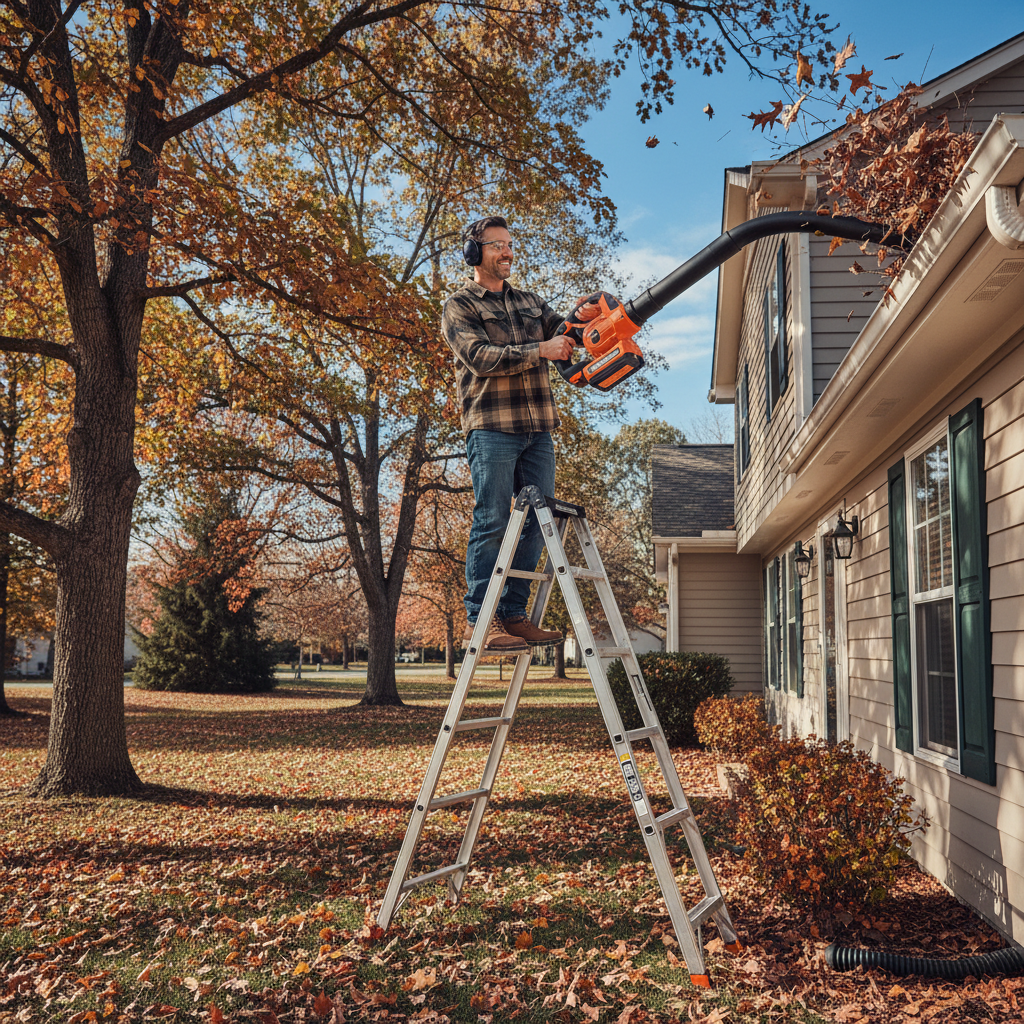
This guide covers when a blower works well, when it’s the wrong tool, what attachments matter, and a practical routine you can repeat each season. You’ll also get a quick checklist, a comparison table, and the small details that usually separate a clean run from a “why is everything covered in sludge” afternoon.
When a leaf blower is a good (and bad) choice for gutters
How to clean gutters with a leaf blower depends a lot on what’s inside the gutter right now. A blower is great for light, dry material, and pretty underwhelming for wet, compacted gunk.
Works well for
- Dry leaves, pine needles, seed pods, and light roof debris
- Regular maintenance (every few weeks in fall, or after big wind events)
- Homes where you can control the blowout zone (tarped lawn, easy cleanup)
Often fails or gets messy for
- Wet sludge and decomposed leaf soup that sticks to the trough
- Heavy shingle grit (asphalt granules) that behaves more like sand
- Clogged downspouts where water already backs up
- Gutters with loose spikes, sagging sections, or rust-through
According to OSHA, falls remain a leading cause of serious workplace injuries, and ladders are a common factor in fall incidents, so even for a “simple” weekend task, treat ladder safety like the main job and gutter cleaning like the bonus.
Gear checklist and setup (so you don’t fight the tool)
You can blow gutters with a standard leaf blower, but the right add-ons make it more predictable. The biggest upgrade is a gutter-cleaning kit that angles the airflow down into the trough.
- Leaf blower (corded, battery, or gas). Higher airflow helps more than raw MPH.
- Gutter cleaning attachment (curved wand with angled nozzle, usually 6–12 feet reach)
- Ladder or a ground-based approach if your setup allows it
- Eye protection and hearing protection
- Gloves (especially if you might switch to hand cleanup)
- Tarp or drop cloth to catch debris where it lands
- Garden hose for a quick flush test after blowing
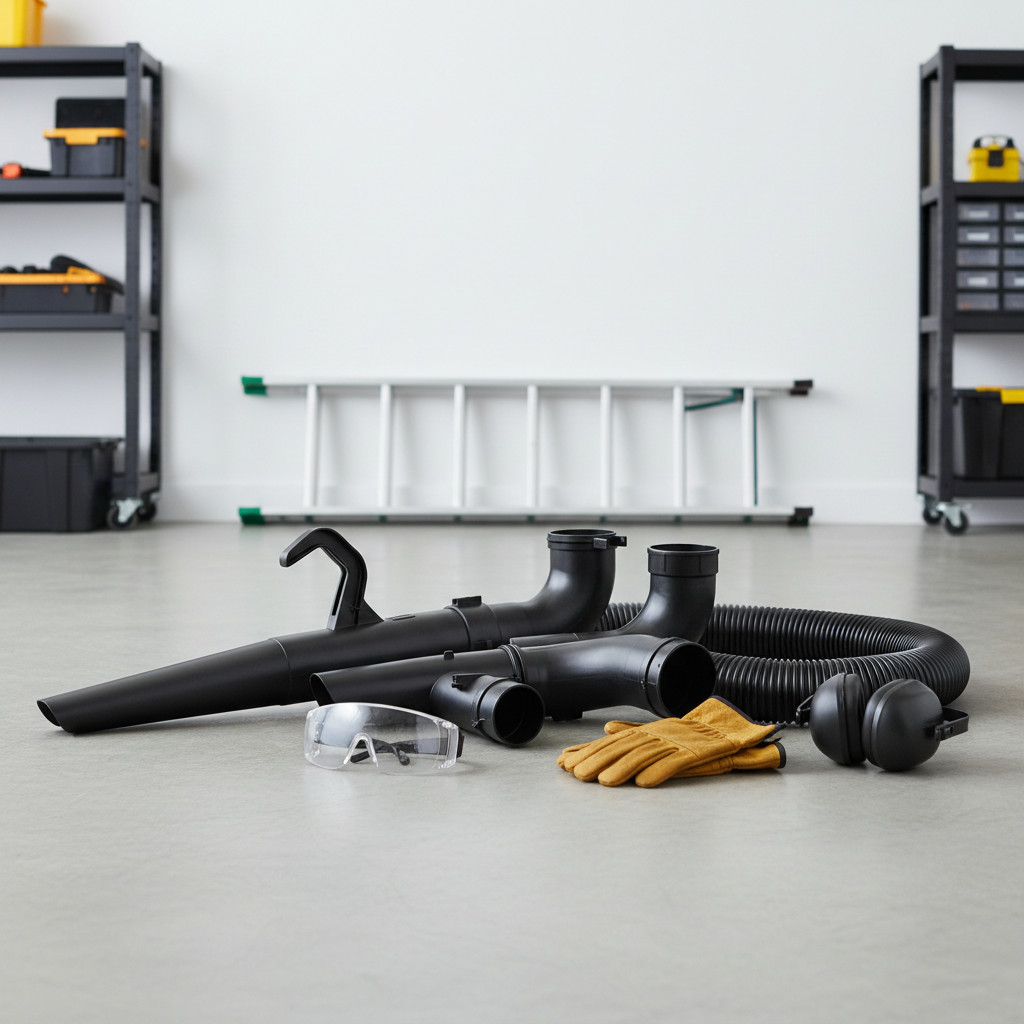
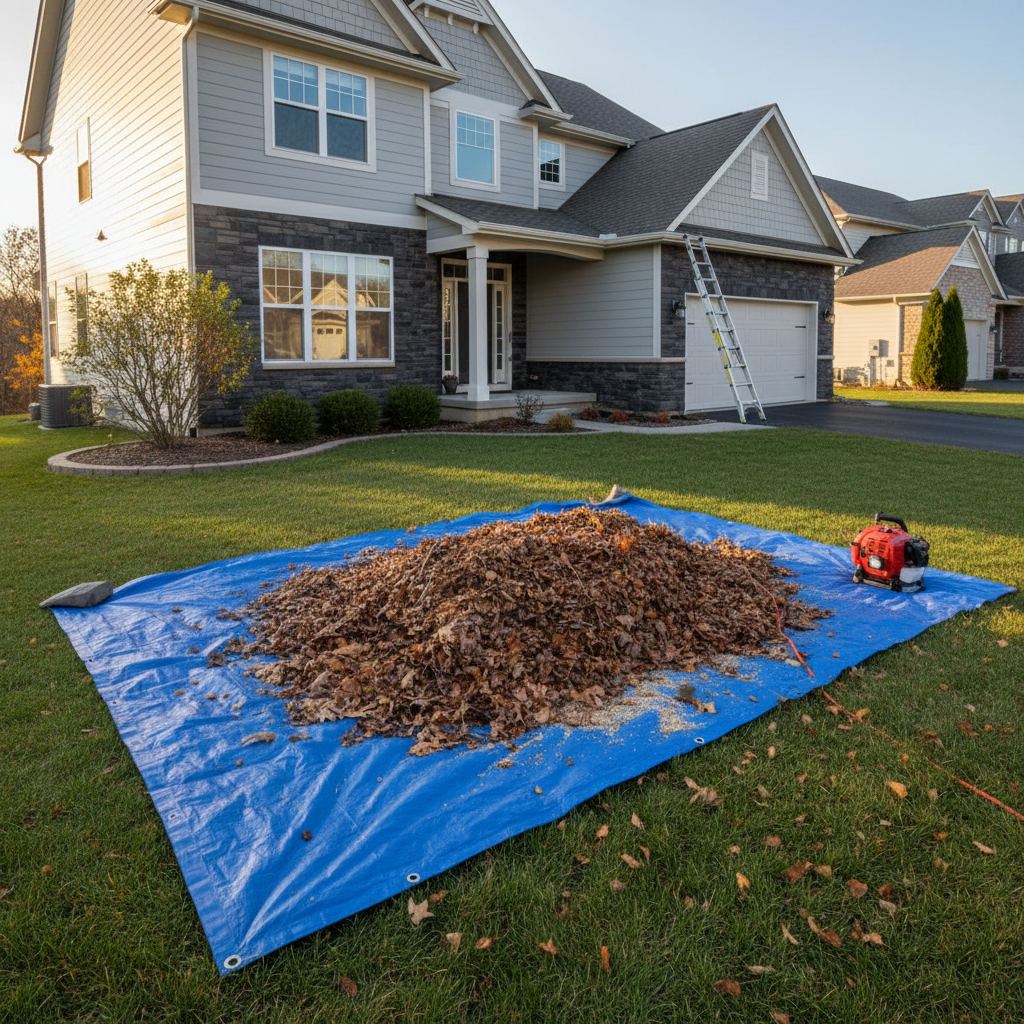
Quick setup tip: put the tarp where you want the mess to go, not where you hope it goes. Most debris exits near downspouts and corners, and wind will push it farther than you expect.
A fast self-check: which gutter situation do you have?
If you’re deciding whether to start with a blower, use this short diagnostic. It prevents a lot of wasted time.
- Look in the gutter: if you see crisp leaves and needles, blower-first is usually fine.
- Poke a small section with a stick: if it feels like mud or compost, plan on scooping or rinsing.
- Check the downspout exit: if it’s already clogged, a blower may just pack it tighter.
- After rain: if water overflowed the gutter edge, assume there’s a blockage or slope issue.
- Gutter guards installed: confirm whether you’re clearing the top screen or the gutter beneath it.
Rule of thumb: if it’s dry and loose, air works. If it’s wet and heavy, you’ll likely need a hand tool, hose pressure, or a pro-grade solution.
Step-by-step: how to clean gutters with a leaf blower
How to clean gutters with a leaf blower is easiest when you work in short sections and always push debris toward a planned exit point. Rushing usually means you “snowplow” material into a downspout elbow and create a new clog.
1) Pick your method: ladder work vs. ground-based
- Ladder method: most common, best control, but highest fall risk.
- Ground method: possible with long gutter kits on single-story homes; safer, but visibility can be worse.
2) Set the blower to a controlled output
Start at a moderate setting. Full throttle can blast debris under shingles, into soffit vents, or straight back at you if the nozzle angle is wrong.
3) Start away from the downspout
Begin at the end opposite the downspout and work toward it. This keeps material moving in one direction instead of bouncing around and resettling.
4) Use short bursts and keep the nozzle angled down
- Angle the airflow into the gutter trough, not across the top edge.
- Use 2–4 second bursts, then pause to see what actually moved.
- If you see grit, slow down and let it walk out gradually.
5) Clear corners and hangers carefully
Corners collect compacted debris. Hangers and spikes also catch material, so work them with smaller bursts so you don’t create a “plug” downstream.
6) Do a quick flush test
After a section is clean, run water from a hose for 20–30 seconds and watch the downspout discharge. If flow is weak or backs up, you’re dealing with a downspout clog, not just gutter debris.
Best practices that make the job cleaner (and kinder to the gutter)
A leaf blower is powerful enough to move debris and, in some cases, stress older gutters. A few habits reduce both mess and risk.
- Work with the wind: blow in the same direction the breeze wants to carry debris.
- Use a spotter when possible: someone on the ground can warn you about ladder movement and falling debris.
- Mind the roof edge: avoid blasting upward under shingles.
- Protect what matters: close windows, cover AC units, and move patio furniture.
- Plan the cleanup: tarp first, blow second, rake last.
Leaf blower vs other gutter-cleaning options (quick comparison)
If your gutters don’t match the “dry and loose” scenario, you may be better off switching tools instead of forcing it.
| Method | Best for | Downsides | Typical effort |
|---|---|---|---|
| Leaf blower + gutter kit | Dry leaves, routine maintenance | Messy blowout, may not clear wet sludge | Low to medium |
| Hand scoop + bucket | Wet, compacted debris | Slow, requires ladder repositioning | Medium to high |
| Garden hose flush | Final rinse, light buildup | Can overflow and soak siding if clogged | Low |
| Pressure washer (gutter tool) | Stuck-on grime (carefully) | High splash risk, can force water behind fascia | Medium |
| Professional cleaning | Tall homes, frequent clogs, repairs needed | Cost, scheduling | Low for homeowner |
Common mistakes (and what to do instead)
- Blowing toward a clogged downspout: test flow first, or clear the downspout before you start.
- Standing too high on a ladder: keep your belt buckle between ladder rails, and move the ladder more often.
- Trying to “power through” wet sludge: switch to scooping for that section, then finish with air.
- Ignoring gutter condition: if sections are loose, fix fasteners before blasting.
- Skipping cleanup planning: a tarp saves more time than any attachment upgrade.
When to stop and consider professional help
How to clean gutters with a leaf blower is a DIY-friendly task in many single-story situations, but it’s not worth gambling with height or unstable footing.
- Two stories or steep rooflines, especially with uneven ground
- Visible sagging, leaking seams, or rotted fascia
- Persistent overflow even after cleaning, which can suggest pitch or drainage issues
- Bee/wasp activity near the eaves, where disturbance can be risky
If you’re unsure about ladder safety or the gutter structure, asking a qualified professional is usually the more sensible call.
Key takeaways and a simple action plan
If your gutters mostly hold dry leaves, a blower plus a gutter kit can be a fast, repeatable maintenance routine. The moment you see wet buildup or a downspout bottleneck, change tactics instead of escalating force.
- Today: inspect, tarp the landing zone, then clear gutters in sections toward the downspout.
- Afterward: flush with a hose to confirm flow, then note any spots that clog every season.
FAQ
- Can you clean gutters with a leaf blower from the ground?
Sometimes, especially on a single-story home with a long gutter-cleaning attachment. If you can’t see inside the gutter or you’re fighting wind, results tend to be inconsistent. - What leaf blower power do I need for gutters?
Higher airflow usually helps more than advertised top speed. Many mid-range blowers work fine for dry debris, but wet buildup can defeat even powerful units. - Will a leaf blower damage gutters?
In many cases, no, but older or loosely fastened gutters can flex. Keep the nozzle angled down into the trough and avoid blasting upward under shingles. - How do I unclog a downspout after blowing debris into it?
Try a hose flush from the top first. If it still backs up, a plumber’s snake or downspout cleanout tool may help, and stubborn clogs sometimes warrant a pro to avoid bending or splitting the downspout. - Is it better to blow gutters wet or dry?
Dry is typically easier and cleaner. Wet material tends to stick, so you may end up doing a second pass by hand anyway. - Do gutter guards change how you use a leaf blower?
Yes, because you might only be clearing the top surface, not the trough underneath. Some guards trap fine grit below, so a periodic deeper clean still matters. - How often should I clean gutters in the U.S.?
It varies by trees and weather, but many homes need attention in late fall and again in spring. If you see overflow during rain, that’s a practical signal to check sooner.
If you’re trying to keep ladder time low, a leaf blower gutter kit paired with a quick hose flush can be a pretty efficient routine, and if your home has tricky height, chronic clogs, or questionable gutter condition, it may be worth pricing out a seasonal cleaning plan so the problem stays small.