
A screwdriver organizer rack solves the same annoying problem in most garages: you own plenty of drivers, but you still waste time hunting for the right tip, size, or handle.
Neat storage is not just about looks, it is about speed, safety, and not buying duplicates because you could not find what you already had. If you work on cars, DIY projects, or even occasional furniture fixes, a simple rack can change how your workspace feels day to day.
This guide breaks down why screwdrivers end up scattered, how to choose a rack that fits your space and collection, and how to install it in a way that stays organized past week one. You will also get a quick comparison table, a short decision checklist, and a few practical layout ideas that do not require rebuilding your whole shop.
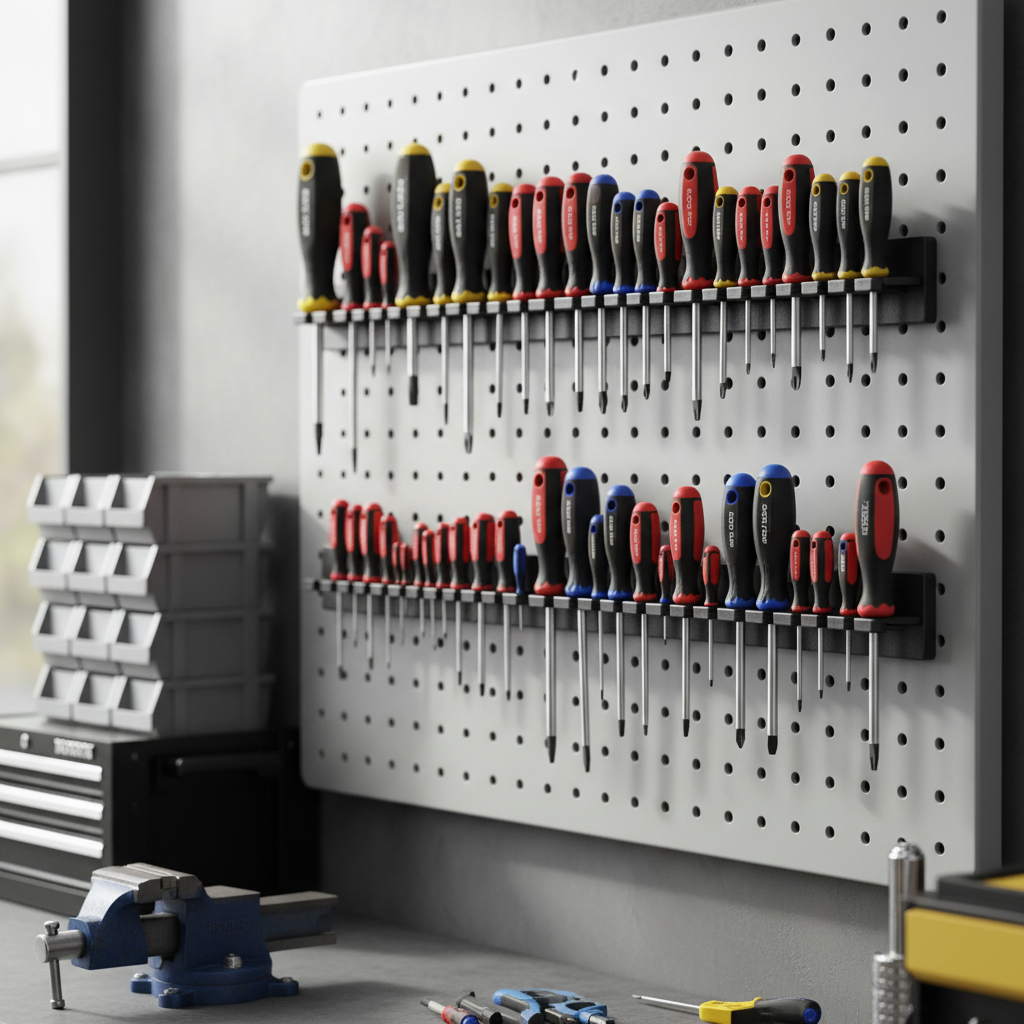
Why screwdrivers get messy (and why racks work)
Most “tool chaos” is predictable. Screwdrivers are small, used often, and easy to drop anywhere, so they drift into drawers, buckets, door pockets, and random shelves.
- Too many near-duplicates: Once you have multiple #2 Phillips or mixed sets, you stop putting them back “perfectly” because it feels pointless.
- Storage without visibility: A drawer can hold 30 drivers, but you still dig through them, which creates more mess than it prevents.
- No home for specialty drivers: Precision, stubby, offset, insulated, and long-shank drivers end up wherever there is space.
- Work rhythm matters: If the storage spot is not within arm’s reach of your bench, it will not get used consistently.
A rack works because it makes the “put it back” step low-effort. You see the empty slot, you return the tool, you move on. That visibility piece is the secret sauce.
Types of screwdriver organizer racks (and what each does best)
Not all racks solve the same problem. The “best” one depends on how you work, how many drivers you own, and whether you want them on the wall, in a drawer, or mobile.
Wall-mounted racks
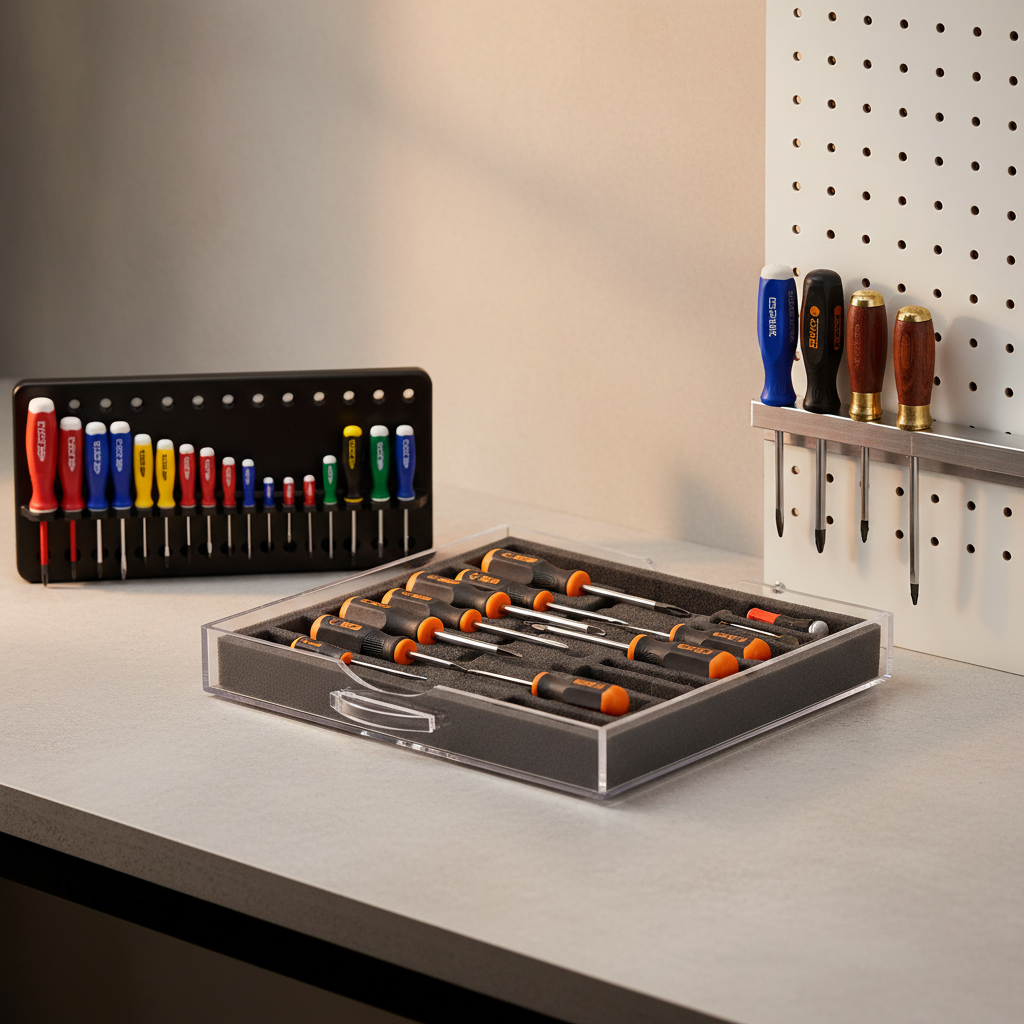
Great for frequent use. They keep handles visible and free up bench space. Many people pair these with a pegboard or French cleat wall.
- Best for: daily DIY, automotive bays, shop benches
- Watch for: stud spacing, drywall anchors, and clearance for long drivers
Drawer organizers
Better when you want a clean wall or you need dust protection. They also reduce sun exposure on rubber handles.
- Best for: mechanics chests, shared spaces, small workshops
- Watch for: drawer depth and “tangled pile” if the organizer is too shallow
Portable racks and caddies
Useful when the job moves, like field service, remodeling, or helping friends. You can take a tight set of drivers without emptying your whole drawer.
- Best for: contractors, on-site work, limited home storage
- Watch for: tipping, and handles catching when you slide it into a bag
Magnetic strips or magnetic rails
Fast access and flexible placement, especially if your drivers vary in handle size. They also make “missing tool” checks quick.
- Best for: mixed collections, small wall areas
- Watch for: weaker magnet strength on some stainless tools, and accidental bumps
Quick comparison table: pick a rack that fits your space
If you feel stuck, narrow the choice by what you need most: visibility, portability, dust control, or maximum capacity.
| Rack style | Access speed | Capacity | Best for | Common downside |
|---|---|---|---|---|
| Wall-mounted rack | High | Medium to high | Garage workbench setups | Needs mounting surface and planning |
| Drawer organizer | Medium | Medium | Tool chests, shared areas | Less visible, easy to outgrow |
| Portable caddy | Medium to high | Low to medium | Mobile tasks, small sets | Not ideal for big collections |
| Magnetic strip | High | Low to medium | Odd sizes, tight wall space | Can drop tools if bumped or overloaded |
A fast self-check: what you actually need
Before you buy or build anything, take two minutes and answer these. This prevents the classic mistake of choosing a rack that looks good but fails in real use.
- How many screwdrivers do you want stored in the main “grab zone” (not your entire collection)?
- Do you use specialty drivers weekly (Torx, security, insulated, precision), or only occasionally?
- Where do you naturally set tools down when you stop working, bench, cart, or toolbox?
- Do you want handles facing out for quick ID, or tips facing out for size sorting?
- Is there a kid/pet safety concern where you store sharp tools, or a risk of tools falling?
If you want one clean rule: keep your most-used drivers in the most visible, lowest-friction spot, then store the rest where you can still find them without digging.
How to set up a screwdriver organizer rack that stays organized
This is where most people lose momentum. The rack gets installed, everything looks great, then two weeks later the wrong drivers end up in the wrong slots. The fix is simple: set it up around behavior, not around perfection.
Step 1: Sort by how you reach for tools
- Primary row: your top 6 to 10 drivers, the ones you grab without thinking.
- Secondary row: specialty or backup drivers, still accessible but not in the prime spots.
- Quarantine spot: one slot or small bin for “needs cleaning” or “handle damaged” so it does not drift back into the lineup.
Step 2: Decide a labeling method you will tolerate
Some people love labels, others hate them. If you will not maintain labels, skip them and use layout instead.
- Simple approach: group by type, Phillips together, flathead together, Torx together.
- Speed approach: group by handle style or brand, since you can spot them instantly.
- Precision approach: label only the specialty drivers that are easy to mix up.
Step 3: Mount it like you mean it
For wall racks, use appropriate anchors for the surface and expected load. If you are drilling into studs, take your time to align so the rack does not end up slightly crooked, that small annoyance tends to reduce long-term use.
According to OSHA, keeping work areas orderly helps reduce slip, trip, and fall hazards in many workplaces. A home garage is not a jobsite, but the same idea applies, fewer loose tools on the floor usually means fewer close calls.
Step 4: Leave breathing room
Do not pack every slot on day one. A little empty space makes it easier to put tools back quickly and gives you room for the screwdriver you inevitably buy next month.
Common mistakes that make racks feel “useless”
Most frustration comes from mismatch: the rack is fine, the setup is wrong for the workflow.
- Mounting too far from the work zone: if you need to walk across the garage to return a driver, you probably will not.
- One rack for everything: mixing precision drivers with chunky demo drivers invites clutter.
- Ignoring long drivers: long-shank screwdrivers need clearance, otherwise they get shoved into a drawer again.
- Over-relying on magnet strips: they are great, but in high-traffic areas a bump can send tools down.
- No rule for “not sure where it goes” tools: add a small catch-all spot so the rack stays neat.
Key takeaway: a screwdriver organizer rack should reduce decisions. If you stand there thinking where a driver belongs, you will stop using it.
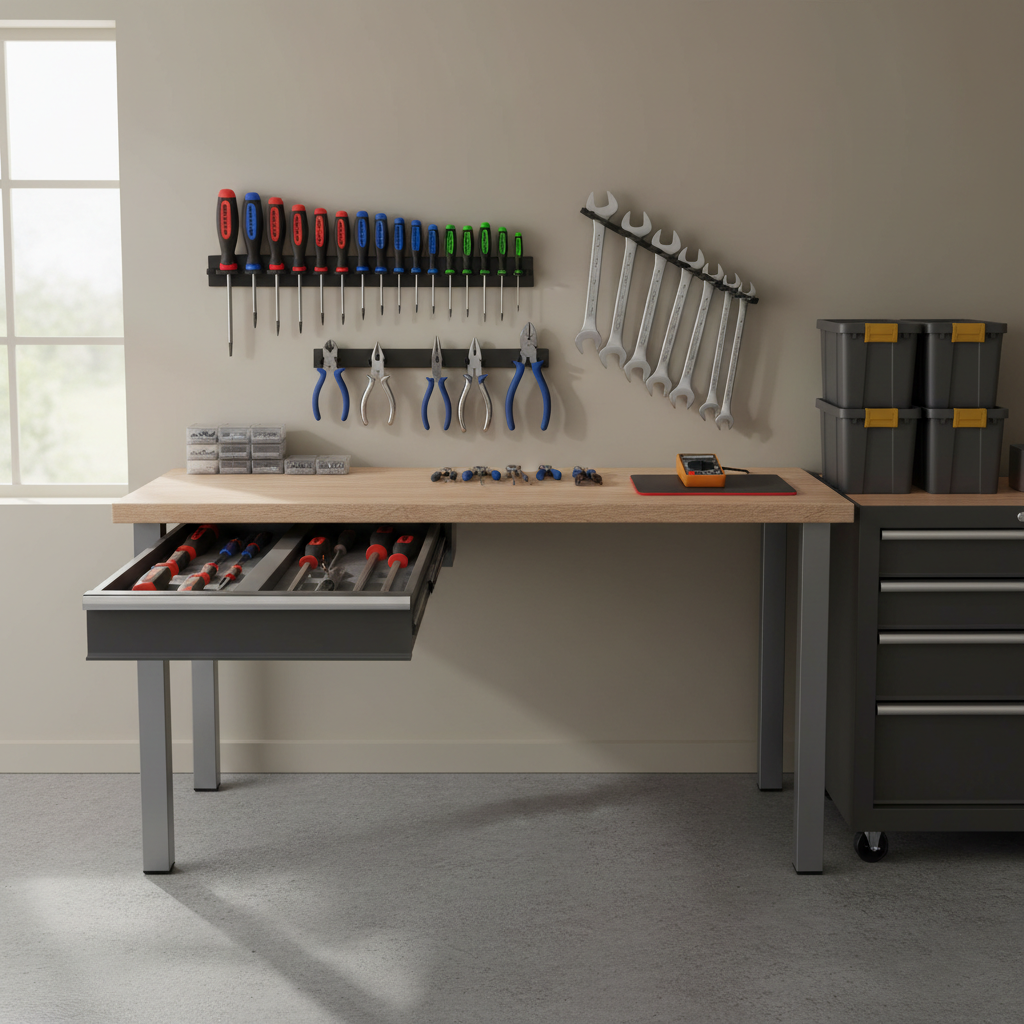
When to upgrade, customize, or ask for help
Most home setups do not need anything fancy, but there are moments where you should slow down and plan more carefully.
- If you store insulated drivers for electrical work, keep them separated and in good condition, and consider consulting a qualified electrician for job-specific safety questions.
- If you rent or cannot drill walls, look for freestanding racks or drawer-based solutions to avoid damage or lease issues.
- If the area is damp, choose materials that resist corrosion and wipe tools down, rust often starts where tools sit for months.
- If you run a shared shop, labels and standardized zones matter more, people will not “guess your system” correctly.
Custom racks make sense when you have an unusual mix, like many precision drivers, or extra-long drivers for automotive work. A basic rule is to optimize for the 80% tools you touch constantly, and keep the rest accessible but not in the way.
Conclusion: a neat rack is really a time-saver
A screwdriver organizer rack is one of those small upgrades that tends to pay off in fewer lost tools, faster work, and a workspace that feels easier to walk into. The winning setup is not the one with the most slots, it is the one that matches how you actually move around your bench.
If you do one thing today, pick a “prime zone” and store only your most-used drivers there, then add a secondary home for the rest. That single decision usually keeps the system from collapsing into a drawer pile again.
FAQ
What size screwdriver organizer rack do I need for a typical home garage?
Many home garages do well with a rack that holds 12 to 24 drivers, because it covers the core set plus a few specialty tools. If you own more than that, consider a second storage zone instead of cramming one rack.
Is a wall rack better than a drawer organizer?
Wall racks usually feel faster because you can see everything at once, but drawers can be better if you want dust control or a cleaner-looking wall. Your “better” option is the one you will actually use every time.
Do magnetic strips damage screwdriver tips or tools?
In many cases, magnetic strips are fine for common drivers, but they can be annoying if tools slide or if the strip is weak. If you notice tools shifting, reduce the load or switch to a rack with dedicated slots.
How should I organize screwdrivers by type?
Group by drive type first (Phillips, slotted, Torx, hex), then by size within each group if you have enough of them. If your collection is small, simple grouping beats over-labeling.
Where should I mount a screwdriver rack in a garage?
Mount it close to your main work surface, usually within one step of where you stand most. Keep it high enough to avoid bumps, but low enough that you can return tools without stretching.
What if my screwdrivers have thick handles and do not fit standard racks?
Look for racks with wider spacing, adjustable slots, or use a magnetic rail for the bulky handles. Another option is using two racks with fewer tools per rack, which often feels cleaner.
How do I keep a rack organized when multiple people use the same tools?
Use a simple layout with obvious groupings, and label only where confusion happens. A small “return later” bin can prevent people from shoving drivers into random slots.
If you are trying to clean up a crowded bench and want a more predictable setup, it can help to choose a screwdriver organizer rack based on your top 10 most-used drivers, then build outward from there, it is usually the quickest path to neat storage without turning your garage into a full weekend project.