
mortar pointing trowel small is the tool you reach for when joints are narrow, corners are tight, and a standard brick trowel feels like overkill.
If you have ever tried packing mortar into thin bed joints, repointing hairline gaps, or touching up a few bricks without making a mess, you already know the pain point: too much mortar on the tool, not enough control at the joint, and a finish that looks “almost right” until it dries.
This guide stays practical, what to look for in a small pointing trowel, how to match it to joint width and mortar type, and a few technique tweaks that usually make the work cleaner and faster.
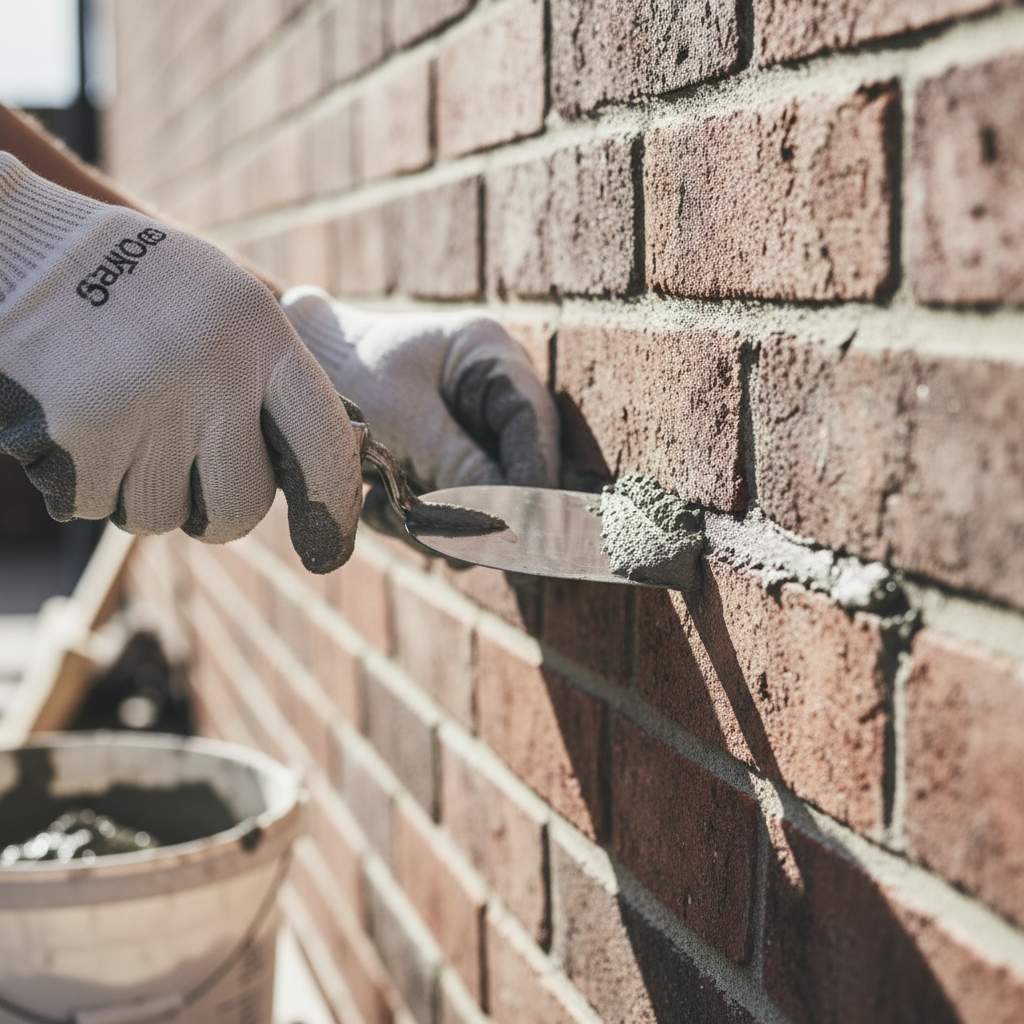
Key takeaway: small pointing trowels are about control, not speed, and the right size and blade shape usually matter more than brand.
Why a small pointing trowel matters (and when it does not)
A smaller pointing trowel earns its place when accuracy beats volume. Many DIY repairs fail not because the mortar is “bad,” but because it never gets properly packed into the joint or it gets smeared over surrounding brick and then scrubbed too late.
- Repointing thin mortar joints on brick or stone, especially older homes where joints vary.
- Spot repairs on chimneys, steps, veneer edges, or around openings where access is awkward.
- Finish control when you want a crisp joint profile before tooling.
Where it is not a magic fix: laying full courses of brick or block, or moving lots of material. In those cases, a brick trowel plus jointers often feels more efficient.
Common reasons small jobs get messy
If your repair looks decent while wet and rough after it cures, the issue is often technique or timing rather than the tool alone. Still, the tool can push you into bad habits when it is the wrong size.
- Overloading the blade, mortar drops, then you “paint” the joint to recover, which leaves voids behind.
- Wrong blade width, too wide and you smear faces, too narrow and you spend extra passes that disturb the bead.
- Mortar consistency mismatch, overly wet mortar slumps, overly dry mortar will not compact well.
- Working past the workable time, edges tear when you tool the joint, especially in heat or wind.
According to OSHA, silica dust from cutting, grinding, or disturbing masonry materials can be hazardous, so if your prep involves grinding out joints, dust control and a proper respirator may be appropriate, and a pro opinion can be worth it on bigger areas.
How to choose the right mortar pointing trowel (small)
Shopping for a mortar pointing trowel small tends to be confusing because “small” can mean blade length, blade width, shank style, or all three. For most homeowners, blade width and stiffness drive the feel more than anything else.
What to look for
- Blade width that matches your joint: you want close to the joint width without dragging on the brick faces.
- Stiffness: a slightly stiffer blade packs mortar better; overly flexible blades can feel “springy.”
- Tapered tip: helps start the fill in tight spots and corners.
- Handle comfort: if it bites your palm after 10 minutes, it will affect your finish at 30.
- Steel quality and finish: smoother blades release mortar easier and clean faster.
Quick selection table
Use this as a starting point, then adjust based on what your wall actually looks like. Old brickwork can vary a lot within the same facade.
| Typical task | Joint size feel | Suggested small trowel choice | Why it helps |
|---|---|---|---|
| Light repointing on brick veneer | Narrow, fairly consistent | Narrow blade, tapered tip | Less smearing, cleaner packing |
| Chimney touch-ups | Tight corners, mixed widths | Small blade with stiff spine | Control in awkward angles |
| Stone veneer gaps | Irregular joints | Slightly wider small trowel | Fills voids without endless passes |
| Cosmetic patching | Shallow defects | Shorter blade length | Reduces over-placement |
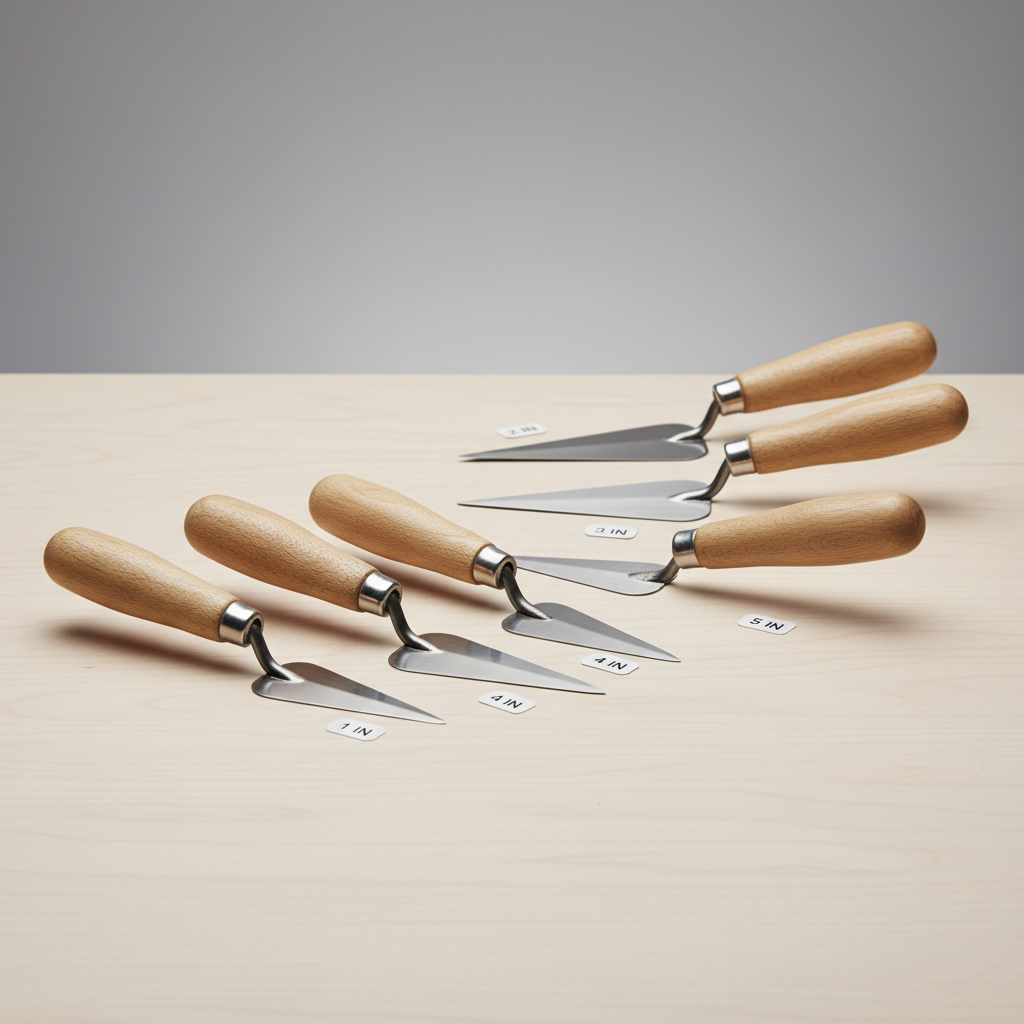
Practical rule: when your blade consistently rides on the brick faces, you are fighting the wrong width, and your joints will look smeared no matter how careful you try to be.
Self-check: are you using the right tool and mix?
Before buying anything, use this quick checklist. It helps you sort “I need a different trowel” from “I need a different approach.”
- Your joint is narrow and you keep wiping mortar off brick faces, even when you slow down.
- You cannot push mortar deep into the joint, it sits near the surface and crumbles later.
- You need to work around angles, returns, or tight edges where a larger tool bumps the surface.
- Your mortar on the trowel slumps and drops before you reach the joint.
- You are doing small-area repointing where setup time matters and you want less waste.
If you checked only the “slumps and drops” point, the mortar consistency may be the main culprit, not the blade.
Step-by-step: cleaner pointing with a small trowel
Using a mortar pointing trowel small well is mostly about loading less, packing more, and resisting the urge to smear and wipe. The goal is a dense fill that tools nicely.
1) Prep the joint (do not skip this)
- Remove loose mortar until you reach material that feels solid.
- Brush out dust and debris, a clean joint accepts mortar better.
- Lightly dampen dry masonry in many cases, it can reduce rapid water loss, especially in heat.
According to the Brick Industry Association, repointing quality depends heavily on proper joint preparation and achieving good bond, which often starts with clean, sound joint edges.
2) Mix to “holds shape” not “pourable”
- Mortar that sits on the trowel without sliding usually behaves better for pointing.
- If it feels sticky and drags hard, it may be too dry or starting to set.
If you are matching an existing wall, mortar type and color can be tricky, and on historic brick you may want professional guidance because overly hard mortar can damage softer masonry over time.
3) Load small amounts on the tip
- Pick up a small ribbon of mortar, then rotate your wrist so the tip leads.
- Press mortar into the back of the joint, then add more in layers rather than one big pass.
- Use the trowel edge to “cut” excess cleanly before it smears across faces.
4) Pack, then tool at the right moment
- Compact mortar with firm pressure; voids are what fail first.
- Tool when the surface has begun to firm, not when it is glossy wet.
- Keep a small brush handy for crumbs at the edge, avoid wet sponges too early.
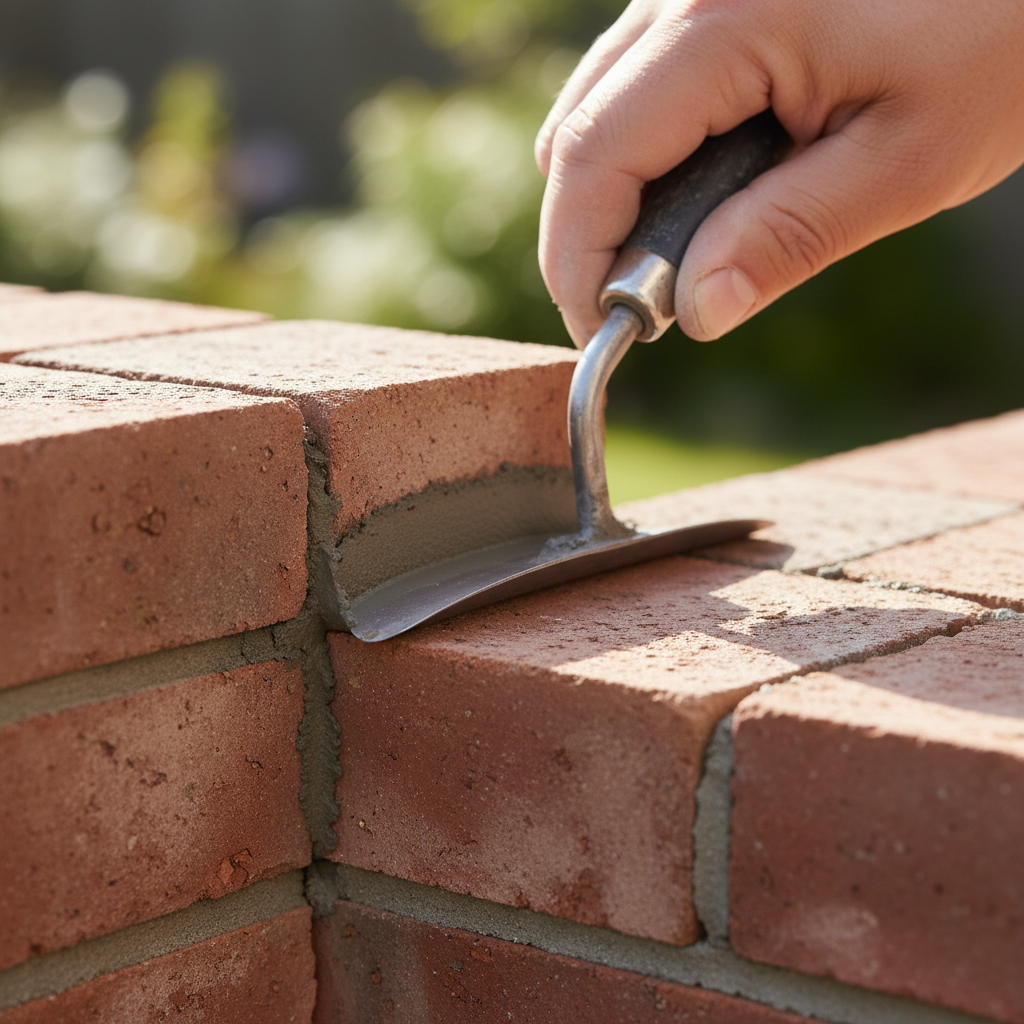
Small but important: if you keep “fixing” a joint after it starts to set, it often turns sandy and weak at the surface, even if it looks okay for a day.
Mistakes that waste time (and how to avoid them)
Most frustration comes from repeating a pattern that feels productive in the moment. The wall usually tells a different story once everything dries.
- Skipping depth: surface patches pop out; aim for a proper depth where feasible, especially on repointing.
- Cleaning too late: once mortar haze hardens, removal can scratch brick faces.
- Over-wetting during cleanup: excess water can weaken the surface or smear fines across the brick.
- One-tool mindset: pairing a small pointing trowel with a jointer and a stiff brush often beats forcing one tool to do everything.
If you are working on painted brick, spalling brick, or a chimney with signs of movement, cosmetic pointing can hide a bigger problem. That is where “cleaner joints” stops being the main goal.
When to bring in a pro (or at least ask for advice)
A mortar pointing trowel small can handle plenty of homeowner repairs, but certain situations deserve a more cautious approach.
- Large areas of missing mortar, deep cracks, or bulging walls.
- Chimney damage near the roofline, access and fall risk matter.
- Historic masonry where mortar selection must match the original, wrong mortar can accelerate damage.
- Any job requiring grinding out joints, dust exposure and control may require professional-grade methods.
According to NIOSH, respirable crystalline silica exposure is a serious concern in construction tasks that generate dust, so if you plan to grind or cut masonry, consider proper engineering controls and PPE, and consult a qualified contractor if unsure.
Conclusion: the small trowel that earns its keep
A small pointing tool works best when you treat it like a precision tool, match blade width to your joints, load less mortar, and focus on packing before you chase appearance. If you are shopping, prioritize fit and stiffness over extra features, then practice on a hidden section so your timing feels natural.
Action steps: check your joint widths with a quick visual and a ruler, then choose a small blade that runs close without riding the brick faces, and plan your workflow around short batches of mortar so you are not fighting set time.
FAQ
What is a small pointing trowel used for?
It is mainly for placing and packing mortar into narrow joints during repointing or small repairs, where a larger trowel tends to smear surrounding brick and reduces control.
How do I pick the right size for my joints?
Aim for a blade width close to the joint width without dragging on the masonry faces, if the tool constantly scrapes the edges, go narrower; if you need too many passes to fill, go slightly wider.
Is a small pointing trowel the same as a tuck pointing trowel?
People use the terms loosely, but tuckpointing often refers to a specific finish style and may involve additional tools; the small pointing trowel is the general-purpose placer for mortar in tight joints.
Why does my mortar keep falling off the trowel?
Often the mix runs too wet or you are loading too much at once; try a stiffer mix that holds shape, load a smaller ribbon on the tip, and place in layers.
Can I repoint old brick with any mortar from the store?
Sometimes, but mortar compatibility matters, especially on older, softer brick; if the new mortar is too hard, it can contribute to brick damage over time, so consider getting guidance for historic or fragile masonry.
Do I need to wet the joints before pointing?
Many situations benefit from lightly dampening dry masonry so it does not pull water from fresh mortar too fast, but avoid soaking; conditions vary with temperature, wind, and brick absorption.
How soon should I tool the joint after filling?
Tool when the mortar starts to firm and loses its wet sheen, if you tool too early it smears, too late it tears; test a small section and watch how it responds.
What other tools pair well with a small pointing trowel?
A jointer sized to your joint, a stiff brush, and a hawk or mortar board usually make the workflow smoother, and they reduce the temptation to overload the trowel.
If you are doing a small repair and want a more “no drama” setup, it often helps to pick a small pointing trowel that matches your joint width, add a basic jointer, and practice your mortar consistency on a scrap surface before touching the visible wall.