The best rotary hammer drill for concrete in 2026 is the one that matches your hole size, duty cycle, and bit system, not the one with the loudest specs on the box. If you’re fighting slow drilling, smoking bits, or holes that wander, it’s usually a mismatch between tool class (SDS-Plus vs SDS-Max), energy-per-blow, and the concrete you’re actually working with.
Concrete is unforgiving, and rotary hammers sit in that sweet spot where the tool can feel “too much” for a small anchor job or “not enough” when you’re chasing rebar or drilling dozens of holes back-to-back. Pick wrong, you lose time and burn consumables. Pick right, it’s almost boring how fast it goes.
This guide breaks down what matters in real use, a quick self-check, a comparison table, and a short list of 2026-ready picks by scenario. I’ll also call out a few buying traps that waste money, especially when you’re shopping online.
What “best” means for concrete: match the tool to the job
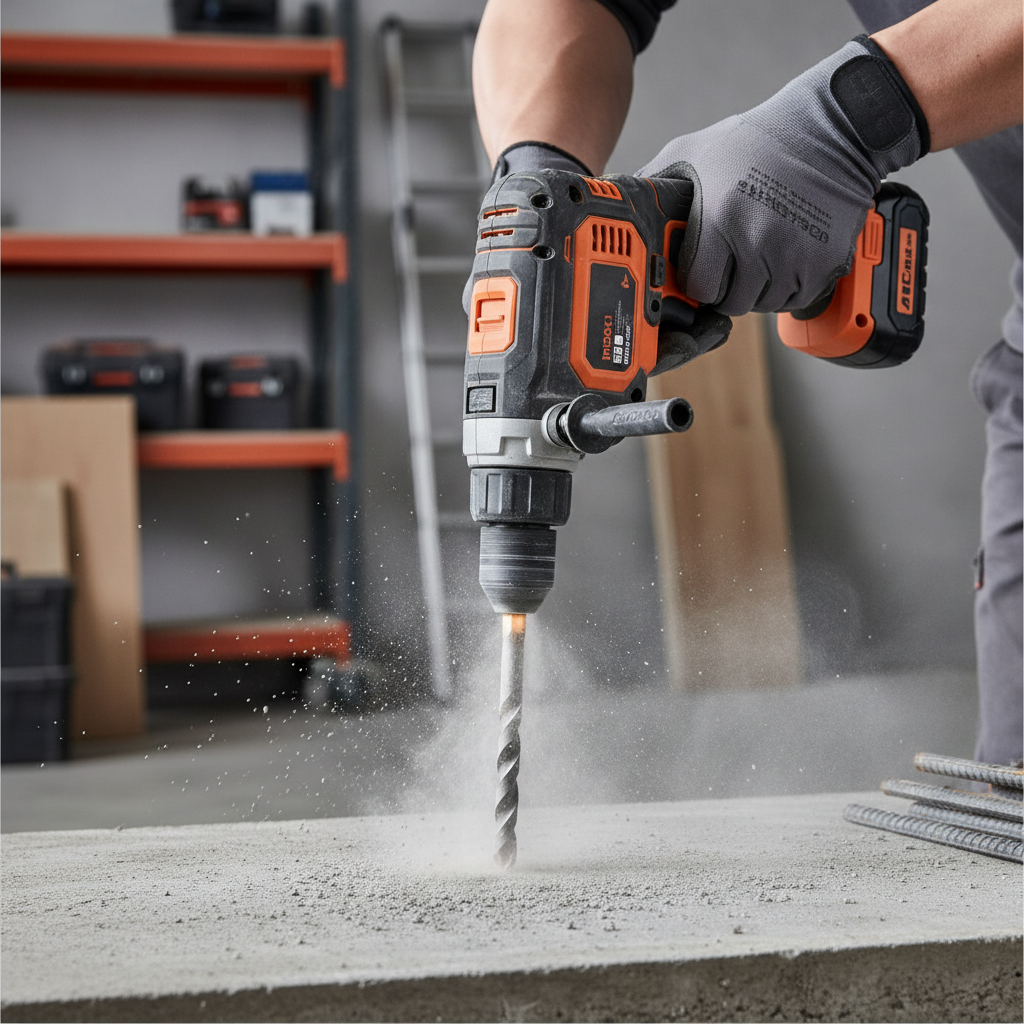
Rotary hammers are not just “hammer drills but stronger.” They use an electro-pneumatic mechanism that delivers actual impact energy through the bit, which is why they stay efficient in hard aggregate and cured slabs.
In practice, “best” depends on three questions you can answer in 30 seconds.
- Typical hole diameter: Tapcons and wedge anchors live in different worlds, and your tool should too.
- How many holes per session: A few holes a month favors compact tools, a hundred holes a day favors heat management and bigger hammers.
- Overhead vs floor drilling: Weight and vibration matter more than people admit, especially above shoulder height.
For most homeowners and many remodelers, an SDS-Plus rotary hammer is the practical center of gravity. For larger anchors, demo work, or constant production drilling, SDS-Max usually pays for itself fast.
Key specs that actually change performance (and what to ignore)
Spec sheets are useful, but only if you know which numbers translate into real drilling speed and bit life.
Impact energy (joules) and blow rate
Joules tells you how hard each hit lands, which tends to matter more in dense concrete than raw RPM. Blow rate helps too, but it’s not a cheat code; too many blows with low energy still feels slow.
SDS-Plus vs SDS-Max (bit system)
SDS-Plus dominates common anchor work and smaller core bits. SDS-Max shines when holes get larger, you need chiseling power, or you want less stalling when you lean into it.
Vibration control and ergonomics
Vibration ratings vary by manufacturer and test method, so treat them as directional. Still, better anti-vibe handles and isolation make a noticeable difference in long sessions. According to OSHA, hand-arm vibration exposure can be a jobsite risk factor, so lower vibration and better work practices are worth caring about.
Dust management compatibility
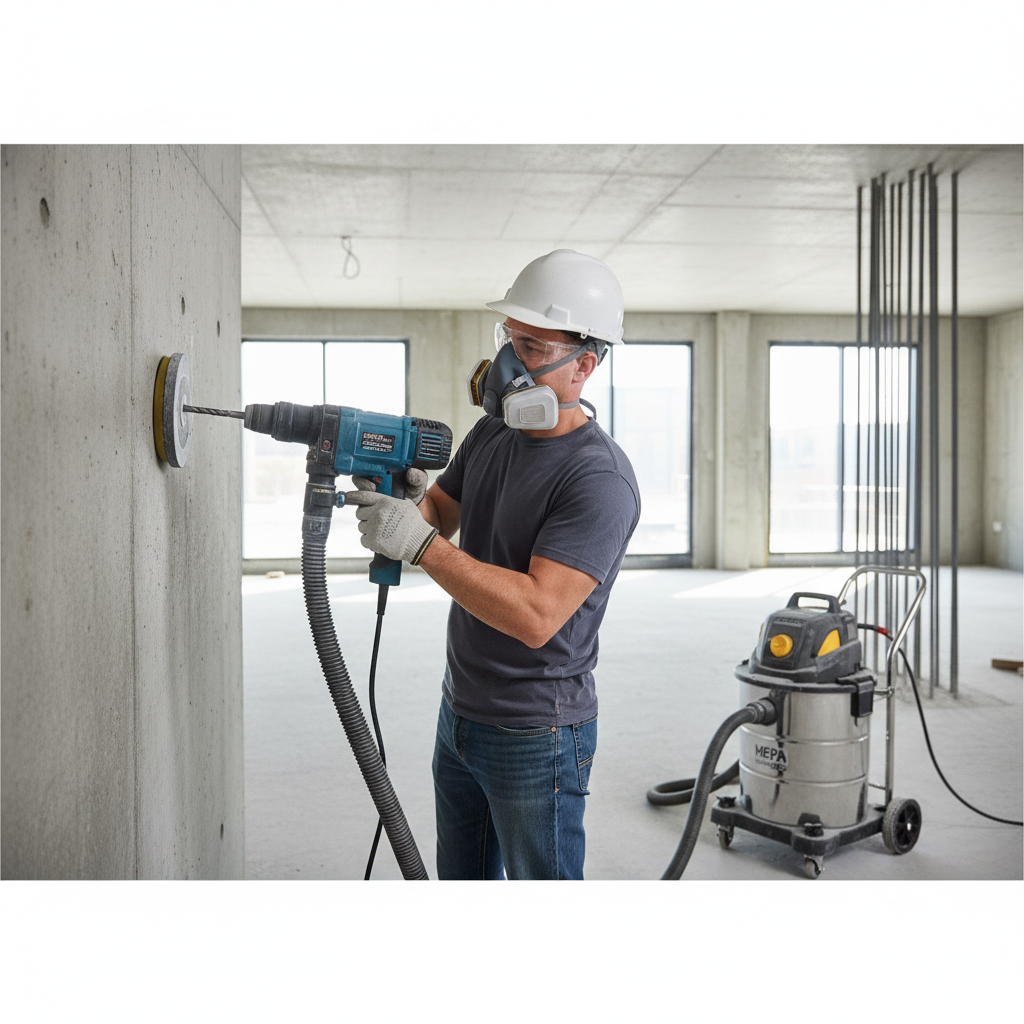
Concrete dust is not just messy. According to OSHA, respirable crystalline silica can present serious health risks, and employers may have compliance requirements. Even for DIY, planning for dust extraction, a shroud, or a compatible vacuum attachment is a smart move.
What’s easy to overvalue
- No-load RPM alone: higher RPM does not guarantee faster drilling in real concrete.
- Max hole size claims: these are often “in ideal material, briefly,” not what you want to do all day.
- Bundled bits: convenient, but usually not the best value or quality long-term.
Quick self-check: which rotary hammer class do you need?
If you’re stuck, use this checklist and choose the first line that fits your reality, not your “maybe someday” projects.
- Light duty SDS-Plus: 3/16 in to 1/2 in holes, occasional anchors, drilling in block or older slab, lots of overhead work.
- All-around SDS-Plus: repeated 1/4 in to 5/8 in holes, frequent anchor installs, small chiseling tasks, remodeling workflow.
- SDS-Max / heavy duty: 3/4 in and up often, thick slabs, harder mix, frequent coring or chiseling, production pace.
If you’re regularly drilling near your tool’s “max rated” diameter, that’s usually your sign to step up a class. The tool will run cooler, bits last longer, and your wrists will thank you.
2026 comparison table: what to look for by scenario
Rather than pretend there’s one winner, here’s a practical “shopping filter” table. Use it to narrow options, then compare a few models within the same class and battery ecosystem.
| Scenario | Recommended class | Bit system | What to prioritize | Common mistake |
|---|---|---|---|---|
| Hanging shelves, small anchors in basement wall | Compact | SDS-Plus | Low weight, good clutch, dust control | Buying too heavy “just in case” |
| Tapcon-heavy work, frequent 1/4–1/2 in holes | All-around | SDS-Plus | Balance of joules, runtime, anti-vibe | Using dull bits too long |
| Wedge anchors, 5/8–1 in holes, thicker slabs | Heavy duty | SDS-Max | Higher impact energy, durability, serviceability | Trying to force SDS-Plus past its comfort zone |
| Occasional chipping, tile removal, small demo | All-around+ | SDS-Plus | Mode switch quality, chisel performance | Expecting it to replace a breaker |
Shortlist: strong “best for” picks (how to choose without overthinking)
I’m not going to claim a single model is right for everyone, because pricing, availability, and battery platforms change. But these categories stay stable, and the brands below tend to compete seriously in the U.S. market.
Best rotary hammer drill for concrete for most people (SDS-Plus all-around)
Look for an SDS-Plus rotary hammer from the major pro lines (Milwaukee M18, DeWalt 20V MAX, Makita LXT/XGT, Bosch, Hilti). In 2026, the “sweet spot” is typically a mid-size cordless unit that can live on a belt hook or ladder without feeling like a penalty.
- Why it wins: fast enough for anchor work, portable, less tiring overhead.
- Who should skip: anyone drilling large diameter holes daily or doing significant chiseling.
Best value path (corded SDS-Plus)
If you don’t already own batteries, corded still makes sense for concrete. You get consistent power, and you avoid the “one more battery” creep. Cord management is the tradeoff.
- Why it wins: strong dollars-to-performance ratio, no runtime anxiety.
- Watch for: cheaper models with weak dust sealing and sloppy mode selectors.
Best for heavy anchors and thick slabs (SDS-Max)
If your work regularly pushes beyond 5/8 in holes, SDS-Max is where your “best rotary hammer drill for concrete” search usually ends. It’s bigger, yes, but it stops feeling like you’re wrestling the tool through the material.
- Why it wins: higher impact energy, less stalling, better for long duty cycles.
- Budget reality: bits and accessories cost more, so plan for that upfront.
Practical drilling technique: faster holes, fewer broken bits
The tool matters, but technique controls a surprising amount of the outcome, especially with small anchor holes where people rush.
- Let the hammer do the work: steady pressure, don’t “white-knuckle” it, too much force can bind the bit and overheat the flutes.
- Start straight, then commit: begin slow to seat the tip, then increase pressure once the bit tracks.
- Peck drill deeper holes: pull the bit out every few seconds to clear dust, drilling dust is basically the enemy of speed.
- Use the right bit grade: modern multi-cutter carbide heads usually track straighter and survive rebar encounters better than bargain bits, though nothing loves rebar.
- If you hit rebar: you may need to reposition the hole, use an approved method, or consult an engineer depending on the structure and code requirements.
Key takeaway: when drilling feels “slow,” the fix is often dust clearing and a sharper bit before you blame the tool.
Mistakes that make you think you bought the wrong tool
A lot of frustration comes from small setup issues. The tool gets blamed, and then people overbuy.
- Running in the wrong mode: rotary-only looks similar until you notice you’re polishing concrete instead of cutting it.
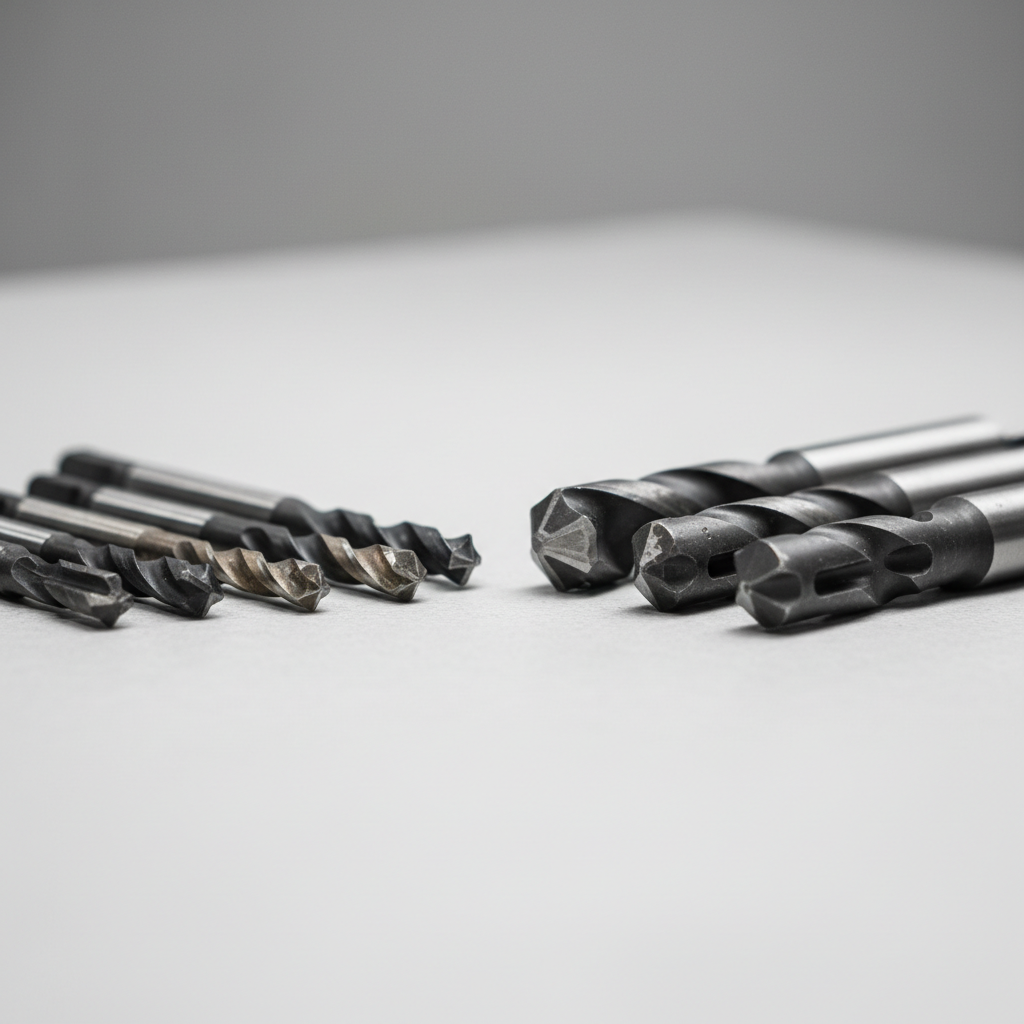
- Dull or wrong bit: masonry bits for hammer drills are not the same as SDS bits for rotary hammers.
- No depth stop: overdrilling anchors wastes time and can compromise holding strength depending on the anchor type.
- Ignoring dust: dust-packed holes reduce anchor performance. Many anchor manufacturers specify hole cleaning steps.
According to ANSI (via published safety standards commonly referenced in construction), eye and hearing protection are core PPE for power tool work. Add a respirator or dust control when concrete dust is present, and if you’re unsure what’s appropriate for your situation, it’s reasonable to ask a safety professional.
Conclusion: a confident way to pick your 2026 rotary hammer
If you want a clean decision, pick the tool class first, then pick within your battery platform, then spend the extra attention on bits and dust control. In many cases, the best rotary hammer drill for concrete is an SDS-Plus mid-size model paired with quality bits and a simple extraction setup, because that combination fixes the real bottlenecks.
Your next step: write down your most common hole size and how many holes you drill per session, then choose SDS-Plus or SDS-Max accordingly. If you’re on the fence and your projects lean heavier, stepping up a class often costs less than replacing burned-up bits and losing weekends to slow drilling.